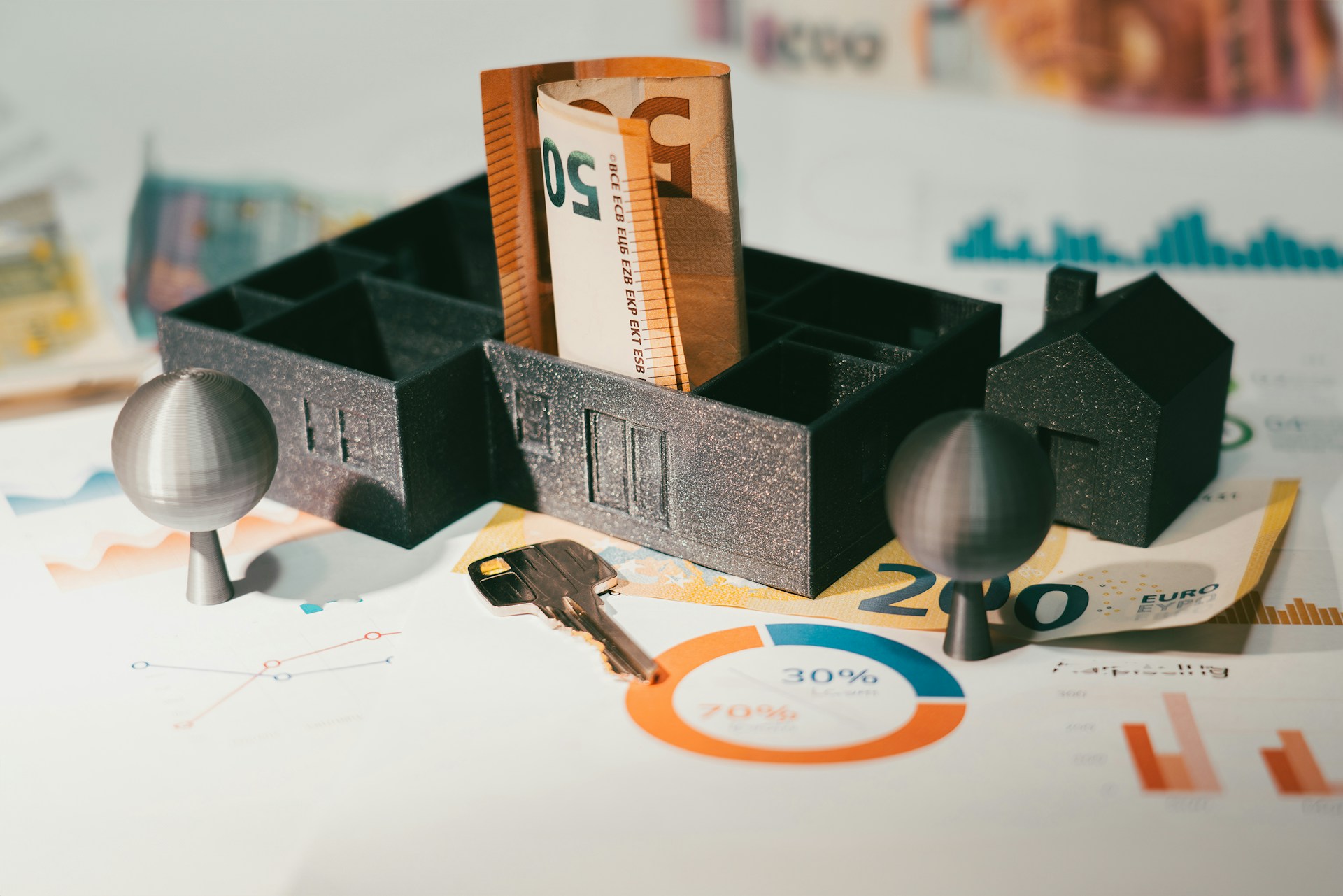
Purchasing your first house is an exciting moment, but if we’re being honest, it can also be overwhelming. One of the largest obstacles is understanding how first-time buyer mortgages work in practice. Put simply, a first-time buyer mortgage is a loan product that enables you to purchase a house or flat for the first time, i.e., if you have never owned a property before.
It sounds simple, but there are many steps, terms, and choices involved. That is why it is crucial to understand how it all works. The more information you have in advance, the more confident and in control you will feel when the time comes to take the leap.
What Is a First-Time Buyer Mortgage?
A first-time buyer mortgage is precisely as it sounds: a product intended for those purchasing their first home. It functions similarly to a typical mortgage: you borrow money from a lender to purchase property and then repay it, along with interest, on a monthly basis. But there are differences that make it easier for those just starting out.
Typically, you must be a person who has not previously owned a property, either in the UK or abroad. Some lenders may also consider you a first-time buyer if you’ve ever owned a property with someone else, but not in your name, or if you’ve inherited a property, even if you’re not a deed holder. It’s probably worth looking at how your lender defines it.
Mortgages for first-time buyers often include incentives to help make the first step onto the property ladder a little easier. These may include increase affordability, cashback incentives, or eligibility for government schemes such as the First Homes initiatives.
The larger catch in standard mortgage language is the focus on helping you begin. Lenders understand that you may not have a substantial deposit or have significant income so many products are designed with that in mind to help make the transition to your own home a bit easier.
How Much Can a First-Time Buyer Borrow?
The amount that you could borrow as a first-time homebuyer varies based on a handful of key factors, and it’s not all about your income. Lenders apply what is known as an affordability check to determine how much you can afford to repay each month without overstretching your finances.
A popular starting point is the income multiple, generally in the range of 4 to 4.5 times your annual salary. So if you were earning £30,000, you might be able to borrow from around £120,000 to £135,000. If you are buying with someone else, you would also include their income. There are also scenarios where lenders may allow you to borrow 6 times your income, but this is circumstantial. But that’s not the end of the story.
Lenders will also consider your outgoings, such as credit card payments, car finance, childcare and even your Netflix subscription, to work out how much disposable income you have. The greater the fixed expenses you already have, the less you could be allowed to borrow.
All lenders are different, so how much you can borrow will depend on who you go with, which is why it’s always worth talking to a mortgage broker or punching your figures into an online calculator to give you a rough idea based on your own circumstances.
Deposit Requirements
You’ll generally need to provide a deposit of at least 5% of the value of the property as a first-time buyer. So, if you’re dreaming of a £200,000 house, that’s a £10,000 minimum saving pot. Some may request more, particularly if your credit history is not perfect, but 5–10% tends to be the norm.
The more you can bring to the table, the better your mortgage deal is probably going to be. Why? That’s because the more you can put down, the less you can borrow, and that makes you less risky in the eyes of a lender. That can pave the way for lower interest rates, lower monthly payments and even a larger selection of mortgage products.
It can feel like a mountain to climb when saving for a deposit, but thankfully, some tools can assist in the process of saving for your dream home. As an example, if you’re using your LISA for your first home, you’ll receive a 25% government bonus on your savings, up to £1,000 a year. Reducing non-essential spending, establishing an additional savings account or, in some cases, living with family to get ahead, can also accelerate the process.
It’s not always easy, but the larger a deposit you can build, the difference it can make to the deals you’ll be able to qualify for in the future.
Types of Mortgages for First-Time Buyers
When you’re a first-time home buyer, selecting the right mortgage can be a bit of a minefield. There are several primary approaches, each with its pros and cons, depending on your plans, budget, and risk tolerance.
Fixed-rate mortgages are popular among first-time home buyers because they provide stability. Your rate of interest and monthly payment remain the same for a portion of the term (typically 2, 3, or 5 years). It’s excellent for budgeting, since you know precisely what you’ll be paying each month, even if interest rates go up. The downside? If rates fall, you may not benefit.
Trackers are based on a percentage above the Bank of England base rate. So your repayments can rise or fall according to what the base rate does. These can be less expensive upfront, but less reliable, which could be more challenging if your budget is tight.
Offset mortgages connect your savings to your mortgage. Instead of receiving interest on your savings, the interest is applied to lower the balance on your mortgage, which is also subject to interest. It can save money in the long run, but you need to have a substantial amount saved up for this to really work for you.
Each of these types has pros and cons, so it’s worth talking to a broker who can help you find the best fit.

The Application Process Step-by-Step
Getting a mortgage as a first-time homebuyer can feel like a daunting task, but the process can be broken down into a series of smaller, more manageable steps. Here is how the process typically unfolds, from start to finish:
1. Get an Agreement in Principle (AIP)
This is also known as a Mortgage in Principle, or Decision in Principle and essentially states that a lender could be willing to lend you a sum (though subject to conditions). It’s using rudimentary details like your income and credit score, and it’s not set in stone, but it signals to estate agents that you’re a serious buyer.
2. Start house hunting
With your AIP in hand, you can begin viewing houses that you can easily afford. If you see one you like, you can make an offer.
3. Offer accepted
Assuming your offer is accepted, now it’s time to transition to the full mortgage application. Now things start getting real.
4. Full mortgage application
You’ll also need to supply documentation such as payslips, bank statements, ID and information about the property. The lender will conduct affordability checks and a credit search.
5. Valuation and underwriting
The lender organises a valuation to ensure the property is worth the price you’re paying. The underwriters start to underwriter, meanwhile, will examine your paperwork and determine whether you are suitable based on the information provided.
6. Mortgage offer issued
If all is in order, you’ll receive a formal mortgage offer, signalling the next phase to proceed.
7. Legal work (conveyancing)
Your lawyer or conveyancer will take care of the legal aspects: examining the title, raising enquiries, and sorting out contracts. You’ll also set up things like building insurance.
8. Exchange and completion
From the moment contracts are exchanged, you’re legally bound. On the closing day, the monies are deposited, and you are handed the keys to your new home.
And just like that, you’re officially a homeowner!
Help & Support Available
Purchasing your first home can be overwhelming, but you don’t have to navigate the process alone. Plenty of resources are available to help make things more affordable and accessible.
If you are saving for a deposit, the Lifetime ISA (LISA) is a fantastic place to begin. You can save up to £4,000 a year, and the government will give you a 25 per cent bonus, up to £1,000 a year. You must be between 18 and 39 years old to open one, and the money must be used to purchase your first home or for retirement.
The discounts provided as part of the First Homes initiative can be between 30% and 50% for first-time buyers, with priority given to those working in key worker roles, such as nurses, teachers, or in other local key services. It is intended to keep homes affordable indefinitely, even after they are sold.
With Shared Ownership, you purchase a share of your home (typically between 10% and 75%) and pay rent on the remaining portion. It is a helpful solution if you cannot manage in the long term on your own and want to be on the property ladder a bit sooner.
Some local councils and housing associations also provide low-deposit schemes or grants, so it’s worth seeing what’s available in your area.
These temporary support programs can have a significant impact, helping you make a move even if your nest egg is small and your income is limited.
Common Pitfalls to Avoid
Even experienced buyers encounter a few common hiccups, but most are preventable with some preparation.
One glaring mistake is failing to understand the total cost of purchasing a home. And it’s not just the deposit, you’ll need to budget for legal fees, surveys, moving costs, and sometimes stamp duty. The budget must be realistic (with a cushion) to play its part in maintaining sanity.
Moving too quickly into a mortgage without comparing is another trap. First isn’t always best. You can save significantly in the long run by comparing rates and consulting with a broker.
Another common issue is ignoring your credit score. Lenders depend on it heavily, so check yours early and try to improve it if necessary. Paying off debts and keeping your credit utilisation low can go a long way!
Finally, avoid over-extending yourself. Generally, commit only to a mortgage that fits comfortably within your budget, not simply what you are permitted to borrow.
How Mortgaged Can Help
At Mortgaged, we understand that purchasing your first home can seem like a maze, and we are here to help you navigate it, step by step. From the point that you start considering getting a mortgage, we can be there with honest advice, personal recommendations, and help cutting through the jargon.
We work with a variety of lenders, allowing us to find deals that aren’t just the ones at the top of the search results, but also those that fit your budget and situation. We’ll keep everything moving, explain things in clear and easy-to-understand ways, and ensure you feel in control at every step, from your first chat with us through to the day you receive your keys.
Whether you want to know how much you can borrow, what deposit you need or what mortgage type may suit you, we have your back. No pressure. No confusion. Just a professional’s help when you need it most.
Let’s take some of the stress out of buying your first home and add in some fun.

Conclusion
Purchasing your first home is a considerable step, and being familiar with first-time buyer mortgages could take much of the stress out of the equation, so here goes. From learning the amount you can borrow to selecting the correct mortgage type and sidestepping common mistakes, a little knowledge can help you make good decisions.
Don’t forget, there’s lots of help on offer, from government schemes to expert advice, that can help make your dream of owning a home come true. From there, take your time, and don’t be afraid to ask questions and seek assistance. Your dream first home is within reach!
Your home/property may be repossessed if you do not keep up repayments on a mortgage or other debt secured on it.
There may be a fee for mortgage advice. The precise amount will depend upon your circumstances and will be agreed with you before proceeding, but we estimate it will be £395.
Please be aware that by clicking on to the above links you are leaving Mortgaged website. Please note that Mortgaged nor HL Partnership Limited are responsible for the accuracy of the information contained within the linked site(s) accessible from this page